Atheists are finally coming out of the closet, and in some cases denouncing religion. Others still crave a sense of the sacred even though they don’t believe in God. Do atheists have something to learn from religion? Why do so many people call themselves "spiritual but not religious"? And...Read more

Intelligent. Optimistic. Curious.
Episode Archives

Investigative journalist Seymour Hersh made his name when he broke the story of the My Lai Massacre. Looking back you have to wonder: why did Lt. William Calley tell Hersh he’d killed hundreds of Vietnamese civilians? On this hour of To the Best of Our Knowledge Hersh says “because I asked him...Read more
A Swedish environmentalist believes we really should give back to the earth, even after we’ve died. Her company is trying to replace cremation with a technologically-enhanced form of organic composting, and she’s already got the support of King Carl Gustav and the Church of Sweden. In this...Read more

Does anyone still hitchhike? Cult film director John Waters does. At the age of 66, he hitchhiked 2,800 miles, from Baltimore to San Francisco. He tells us about the people who picked him up, along with some who didn't. And did the America Interstate System pave the way...Read more
The pursuit of knowledge can make you do weird things. Sir Isaac Newton explored his eye-socket with a wooden stick. Swedish chemist Karl Scheele was undone by the toxic chemicals he insisted on tasting. And a German scientist named Becher spent years trying to make gold from his own urine,...Read more
To Daniel Libeskind, buildings are much more than concrete boxes. They’re expressions of hope, joy, freedom, and memory. In this hour of To the Best of Our Knowledge, architect Daniel Libeskind talks about his master design for the World Trade Center site.Read more
Cross-dressing terrorist angels. LA Gangbangers covered in Virgin Mary tattoos to protect them from bullets. Prophets in g-strings and pasties. Next time on To the Best of Our Knowledge we’re going to look for god in some unlikely places - in the middle of a math equation, and in the lyrics...Read more
“The medium is the message.” “We shape our tools and thereafter our tools shape us.” “We look at the present through a rear-view mirror. We march backwards into the future.” Those are just a few of Marshall McLuhan’s famous quotes. McLuhan is one of the most influential media thinkers of...Read more
Behold the spectacle of epic proportions! The abundant feast laid out! Tribes decked in battle attire!
Yes, friends. It's Super Bowl weekend, and have we got a show for you...Read more
Whittier called them "the saddest words: it might have been." But turn it around and you'll find places we create to replace the world we live in -- past, present and future. On To the Best of Our Knowledge, other worlds. Scientist Brian Greene looks at the physics of the multiverse, and...Read more
Ingrid Betancourt was kidnapped by Marxist rebels in Columbia while in the midst of her presidential campaign. She spent the next six and a half years in captivity chained, humiliated and abused. But her greatest fear was not death. It was losing her humanity. In this hour of To the Best of Our...Read more
Novelist John Updike doesn’t like doing interviews. At least until the interview starts. Then he realizes it’s kind of flattering to talk about himself. Now, he’s written a novel about a famous artist being interviewed. In this hour of To the Best of Our Knowledge, John Updike on why an...Read more
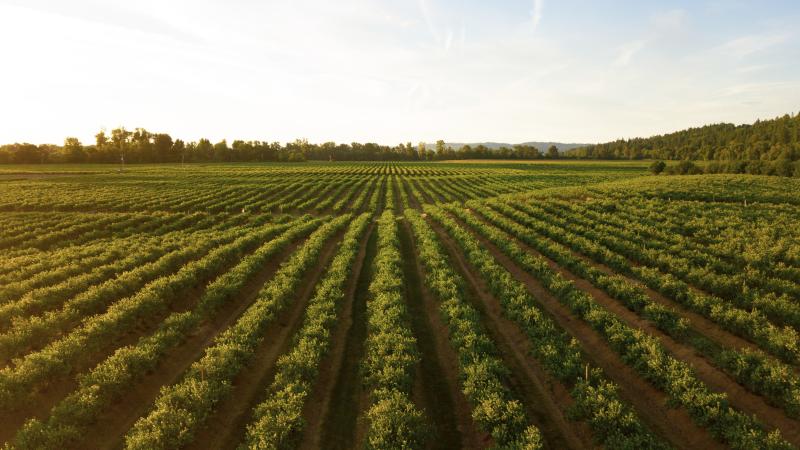
The Back to the Land spirit of the 60s lives on today, in the proliferation of farmer's markets, and the increased interest in sustainability and growing our own food. From the fight to end food waste in America to the art of living small, we'll find out what the Back to the Land spirit...Read more
Whether black from a bottomless cup or as a Frappuccino mocha skim latte, it’s our culture’s elixir, coffee. In this hour of To the Best of Our Knowledge, java, joe, or a cup of mud. Most of us drink it everyday, but few of us know the effects it has on the world’s economy, or even...Read more
Tariq Ramadan has been called the Muslim Martin Luther King, and he's often described as Europe's most important Muslim intellectual. Hundreds of young Muslims turn up at his talks, and tapes of his lectures are widely circulated. He travels throughout the Islamic world, trying to build...Read more
Ben Franklin, Henry Ford, Abigail Adams, Elvis Presley. Know what they have in common? They're all on Daniel Wolff's list of great Americans. Wolff explains the unique ways those people learned what they had to know. We'll also take a hard look at IQ and its relationship to race and class, and...Read more
Do you ever have the strange feeling that you've heard this promo before? Well, in this case, it's only fitting because we're going to explore deja vu on the next edition of To the Best of Our Knowledge. We'll try to find out what causes us to think we've already experienced the exact same...Read more
The collapse of the twin towers gave birth to a strange new world. It was a city of fire and dust, rubble crunching under foot and eerie underground rivers. William Langewiesche was the only journalist with unrestricted access to Ground Zero. What he found there was startling, natural, and...Read more
Sometimes all you really want to take to bed is a good book. In this hour of To the Best of Our Knowledge, meet some passionate readers. We’ll also try to find out if big time critics really hate books.Read more
What if our lives were like DVDs? What if we had alternative endings to look forward to, instead of death? We explore our lust for immortality. And we look at the many alternative endings that Ernest Hemingway wrote for his classic novel, "A Farewell to Arms."

What would a secular society really look like? We take an unconventional look at religion, the fiction it inspires, and reflect on why William James' classic book on mysticism, "The Varieties of Religious Experience," still matters.Read more
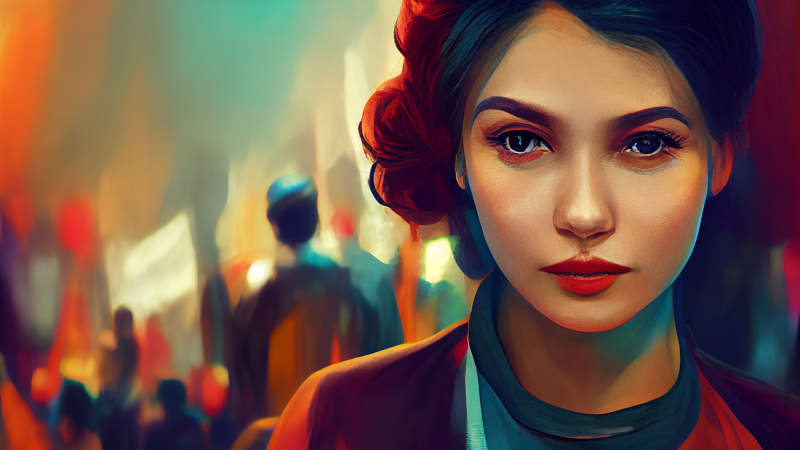
For the first time in American history, young women are choosing independence over marriage. Single women today outnumber married women and have more political power than ever before. It's what Susan B. Anthony, Margaret Sanger and other feminist icons predicted. This hour, how...Read more
What are the great country music singles? Patsy Cline’s “Crazy,” probably. George Jones’ “slobbing tearjerker,” “He Stopped Loving Her Today.” What about the Rolling Stones’ “Honky Tonk Women”? and Otis Redding’s “(Sittin’ On) the Dock of the Bay? According to the book “Heartaches by the...Read more